An employee offboarding checklist is a structured list of tasks that HR, managers, and IT complete when someone leaves your company. A solid offboarding process protects company data, preserves institutional knowledge, and ensures the departing employee leaves on good terms — whether they resigned, retired, or were let go.
Skip it, and you risk security gaps, lost knowledge, and legal headaches. Get it right, and you turn every departure into a smooth transition. (And if your onboarding process is already dialed in, offboarding is the natural counterpart.)
Why Employee Offboarding Matters More Than You Think
Most companies invest heavily in onboarding. Few give offboarding the same attention. That's a costly mistake.
A 25-person marketing agency in Portland learned this the hard way. When their lead developer left without a structured offboarding process, it took the remaining team three weeks to locate critical project documentation, recover shared passwords, and reassign client accounts. Two clients nearly churned during the transition.
Here's what a structured offboarding process actually protects:
| Risk Area | Without Offboarding | With Offboarding |
|---|---|---|
| Data Security | Former employee retains system access | All access revoked within 24 hours |
| Knowledge Loss | Tribal knowledge walks out the door | Documented handoffs preserve context |
| Legal Exposure | Unsigned agreements, missed final pay | Full compliance with state and federal law |
| Team Morale | Remaining staff scrambles to fill gaps | Clear transition plan reduces stress |
| Employer Brand | Departing employee feels dismissed | Professional exit builds alumni goodwill |
According to the Society for Human Resource Management (SHRM), organizations with formal offboarding processes see higher rates of boomerang rehires and stronger employer branding on sites like Glassdoor.
Pre-Departure Planning (Steps 1–5)
The moment you receive a resignation letter or make a termination decision, the clock starts. These first five steps set the foundation.
1. Acknowledge the Resignation or Termination
Respond formally within 24 hours. For voluntary departures, thank the employee and confirm their last working day. For involuntary separations, coordinate with legal counsel before communicating.
2. Notify Key Stakeholders
Alert the people who need to know — and only the people who need to know:
- Direct manager
- HR team
- IT department
- Finance/payroll
- The departing employee's project leads
3. Determine the Last Working Day
Factor in notice periods, accrued PTO, and any contractual obligations. Some states require final paychecks on the last day of work — check your state's requirements on the Department of Labor website.
4. Create a Transition Timeline
Map out every week between now and the departure date. A two-week notice might look like this:
Week 1: Document current projects, begin knowledge transfer sessions, introduce successor to key contacts.
Week 2: Complete handoffs, return equipment, conduct exit interview, process final paperwork.
5. Assign a Transition Owner
One person should own the offboarding process end-to-end. For small teams, this is usually the HR manager or direct supervisor. They track every checklist item and flag blockers early.
Knowledge Transfer Process (Steps 6–10)
This is where most companies drop the ball. Knowledge transfer isn't a single meeting — it's a structured handoff that takes days.

6. Map All Responsibilities
Have the departing employee list every recurring task, project, and relationship they manage. Don't rely on memory — use a simple template:
| Responsibility | Frequency | Key Contacts | Where It's Documented | Successor |
|---|---|---|---|---|
| Weekly client report | Every Monday | Sarah (client), Jim (data) | Google Drive > Reports | _________ |
| Vendor invoice approval | Monthly | Acme Corp (vendor@acme.com) | Accounting portal | _________ |
| Social media calendar | Daily | Marketing Slack channel | Hootsuite | _________ |
7. Schedule Knowledge Transfer Sessions
Block 30–60 minute sessions for each major responsibility area. Record these sessions when possible — a video walkthrough is worth a thousand pages of documentation.
8. Document Undocumented Processes
Every team has "tribal knowledge" — the stuff that only lives in one person's head. Ask pointed questions:
- "What would break if you disappeared tomorrow?"
- "What workarounds do you use that aren't in any wiki?"
- "Who do you call when X goes wrong?"
Store this documentation in a shared team wiki. If you're using Tiny Team's Documents feature, this is the perfect place to capture process knowledge that the whole team can reference.
9. Introduce Successors to Key Contacts
Don't just reassign relationships on a spreadsheet. Schedule brief introduction calls or emails between the successor and every important client, vendor, or partner contact. A warm handoff prevents dropped balls.
10. Transfer Ownership of Shared Resources
Shared drives, project boards, group email aliases, CRM accounts, social media credentials — anything the departing employee "owns" needs a new owner before they leave.
IT and Security Offboarding (Steps 11–16)
This section is non-negotiable. A 2023 study by Beyond Identity found that 83% of employees admitted to maintaining access to accounts at a previous employer after leaving. That's a security incident waiting to happen.

11. Audit All System Access
Build a complete inventory: email, productivity tools, cloud platforms, financial systems, CRM, social media accounts, VPN, and physical access (keycards, alarm codes).
12. Revoke Access on the Last Day
Disable all accounts simultaneously on the last day — not before (demoralizing) and not after (security gap). For involuntary terminations, revoke access immediately.
13. Recover Company Devices
Get everything back: laptops, phones, tablets, chargers, adapters. Tiny Team's People Management includes asset tracking that makes this step straightforward.
14. Forward or Archive Email
Set up email forwarding or an auto-reply directing contacts to the right person. Archive the mailbox per your data retention policy.
15. Transfer Software Licenses
Reassign named licenses (Figma, Adobe, Salesforce, etc.) to prevent paying for unused seats.
16. Update Shared Passwords
Rotate every shared credential the departing employee knew. Use a password manager — this shouldn't be painful.
Return of Company Property (Steps 17–18)
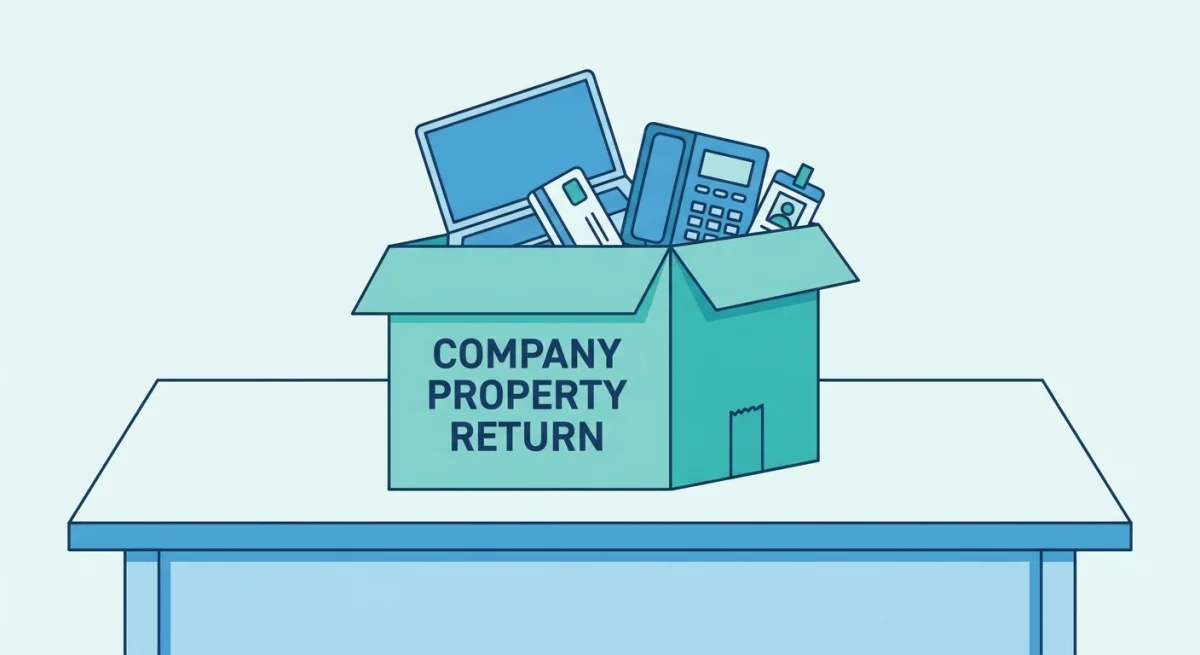
17. Create a Property Return Checklist
Collect laptops, phones, access badges, credit cards, and any specialized equipment. For remote employees, send a prepaid shipping label. Don't hold the final paycheck for returned equipment — that's illegal in most states.
18. Wipe and Reissue Devices
Factory-reset all returned devices before reissuing. Give departing employees a chance to back up personal files first.
Final Paycheck and Benefits (Steps 19–21)
19. Process the Final Paycheck
Include regular pay, accrued PTO (if required by your state), bonuses, commissions, and expense reimbursements. Timing varies by state — California requires it on the last day for terminations, others allow up to 30 days.
20. Provide Benefits Continuation Information
Under COBRA, employers with 20+ employees must offer continued health coverage for up to 18 months. Send the election notice within 14 days. Also cover 401(k) rollover options and HSA/FSA balances.
21. Address Equity or Stock Options
Outline exercise windows and deadlines for vested options. Most agreements give 90 days post-departure to exercise.
Exit Interview Best Practices (Step 22)
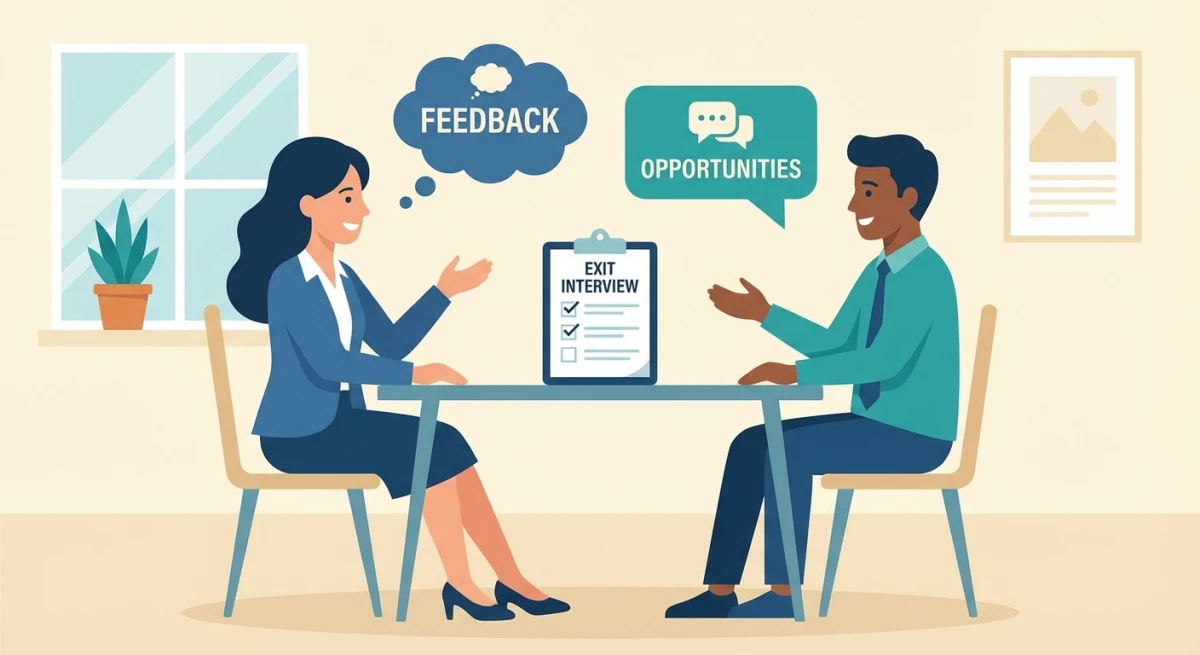
22. Conduct a Thoughtful Exit Interview
Exit interviews are gold mines of honest feedback — but only if you do them right.
Timing matters. Schedule the interview during the employee's last week, after they've mentally checked out enough to be candid but before they've completely disengaged.
Who should conduct it? Not the direct manager. The departing employee is more likely to be honest with someone from HR or a skip-level leader.
Questions that surface real insights: What prompted the job search? What would have made you stay? How would you describe team culture? Did you have the tools to do your job? What should we improve for your successor?
Track themes over time. If multiple people mention the same issue, that's a pattern worth acting on.
Legal and Compliance Requirements (Steps 23–24)
23. Collect Signed Agreements
Make sure all required documents are in order — your employee handbook should outline what's expected. Before the employee walks out the door, confirm you have:
- Non-disclosure agreement (NDA): Remind the employee of ongoing confidentiality obligations. Don't ask them to sign new restrictive agreements on the way out — that's coercive and potentially unenforceable.
- Non-compete acknowledgment: If applicable in your state. Note that the FTC has been challenging non-competes, and several states have banned them outright.
- Intellectual property assignment: Confirm all work product created during employment belongs to the company.
- Separation agreement: For involuntary terminations, especially those involving severance.
24. Update Internal Records
Remove the employee from the org chart, update the team directory, adjust headcount reports, and close out their personnel file. If you're evaluating HR software for your small business, look for tools that automate this step. If you're tracking departures in your HRIS, record the reason for leaving and any relevant notes from the exit interview.
Post-Departure Follow-up (Step 25)
25. Check In After 30 Days
Send a brief, genuine message 30 days after departure. Something like:
"Hey [Name], hope the new role is going well. Just wanted to say thanks again for your contributions here. If there's ever anything we can help with, don't hesitate to reach out."
This isn't just nice — it's strategic. Former employees become potential referral sources, clients, partners, or even boomerang hires. According to Harvard Business Review, companies that maintain alumni relationships see measurable benefits in recruiting and business development.
Quick-Reference Offboarding Checklist
Day 1: Acknowledge departure, notify stakeholders, set last day, assign transition owner. Week 1: Map responsibilities, schedule knowledge transfers, document tribal knowledge, audit system access. Week 2: Introduce successors, transfer shared resources, conduct exit interview, collect agreements. Last Day: Revoke all access, recover devices, forward email, process final paycheck, update records. Day +30: Send a check-in message to maintain the alumni relationship.
Frequently Asked Questions
What is employee offboarding?
Employee offboarding is the formal process of managing a departure — covering knowledge transfer, access revocation, property return, final pay, exit interviews, and compliance. It protects both the company and the departing employee.
How long should the offboarding process take?
For voluntary departures with two-week notice, the process runs the full notice period plus a 30-day post-departure follow-up. For involuntary terminations, IT and security steps happen immediately while administrative tasks follow legal deadlines.
What's the difference between offboarding and termination?
Termination is the act of ending employment. Offboarding is the entire process surrounding that event — voluntary or involuntary. Every termination should trigger an offboarding process.
Who is responsible for employee offboarding?
It's shared: HR owns the process and compliance, the manager handles knowledge transfer, IT manages access and devices, and Finance processes final pay. One person should be assigned as transition owner.
Should you conduct exit interviews for every departing employee?
Yes, for every voluntary departure. For involuntary terminations, consult legal counsel first. Track themes over time to identify systemic issues.
What happens if you skip offboarding?
Former employees may retain system access, knowledge walks out the door, and you risk missing legal obligations like COBRA deadlines or final paycheck requirements.