People operations puts your team first. It shifts HR from paperwork to people. Instead of just tracking rules, you build a culture where everyone thrives.
The results speak for themselves. Companies with strong people ops see 21% higher profits. They also earn 10% higher customer ratings, per Gallup research. For small teams, this shift can change everything.
What Is People Operations?
People operations (or "People Ops") manages the full employee journey. It aims to help both people and the business grow together. Google coined the term in the early 2000s. They wanted HR to feel more human and data-driven.
The old HR model focused on rules and risk. People ops treats your team as your biggest asset. It blends HR tasks with data, culture, and smart design. The goal is simple: help people do their best work.
The Three Pillars of People Ops
Employee experience design. Build great touchpoints across the employee journey. This covers everything from your people management systems to daily tools and team norms.
Data-driven decisions. Use real metrics to guide people choices. Stop guessing what works. Measure it and act on what you find.
Business alignment. Tie people goals to company goals. HR should not work in a silo. Every people initiative should support the business mission.
People Operations vs. Traditional HR
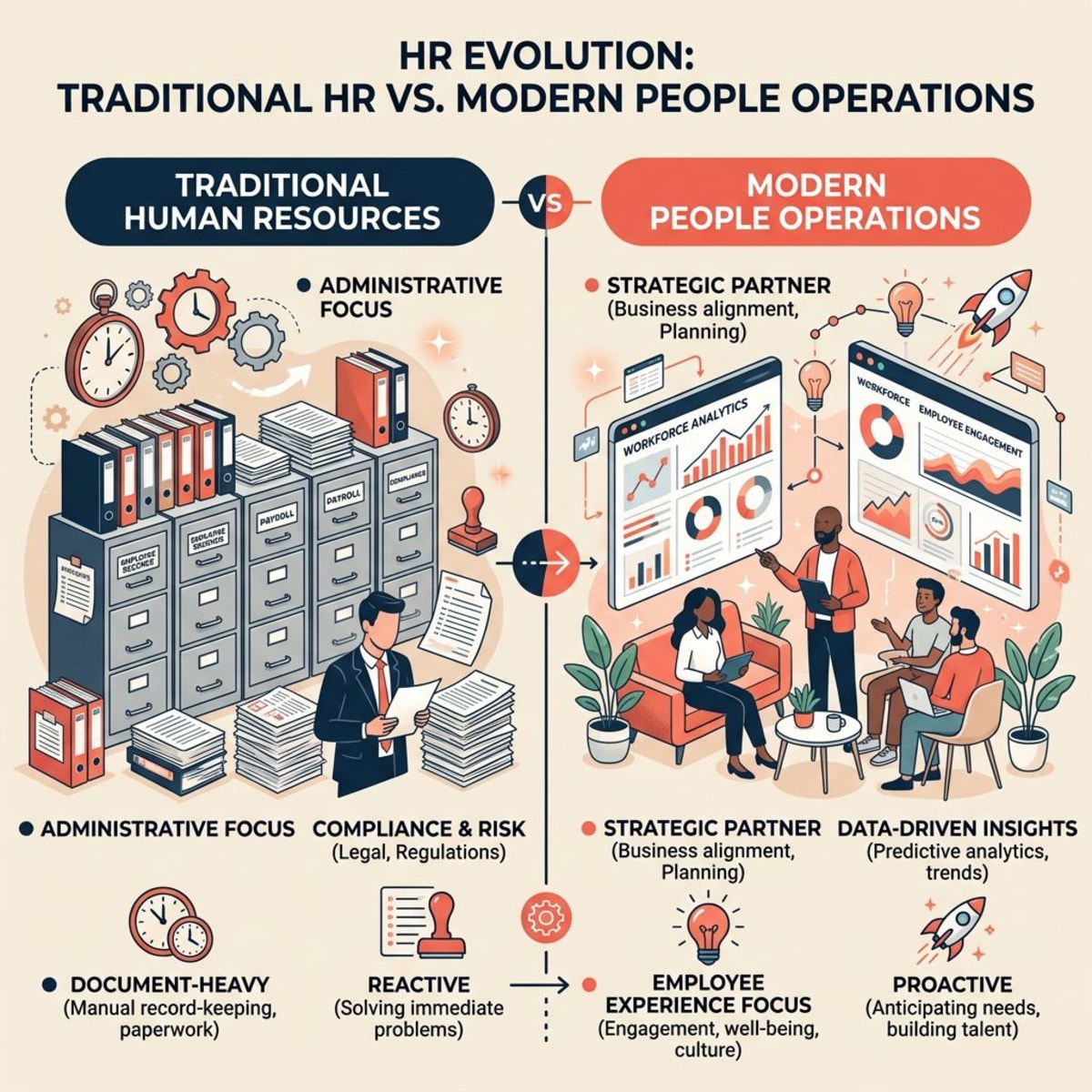
This is more than a name change. It reflects a very different mindset about the role people play in your company.
| Aspect | Traditional HR | People Operations |
|---|---|---|
| Focus | Compliance & risk | Experience & outcomes |
| Approach | Reactive | Proactive |
| Decisions | Policy-driven | Data-driven |
| Role | Rule enforcer | Strategic partner |
| Metrics | Cost cuts, compliance | Retention, output, satisfaction |
| Tools | Filing systems, basic HRIS | Analytics, experience platforms |
| Mindset | Protect from employees | Unlock employee potential |
Example in action: An employee asks for flexible work.
- HR says: Check the policy. Approve or deny based on rules.
- People Ops says: Review data on remote work results. Run a trial. Measure output. Use results to build a better policy for everyone.
One follows rules. The other learns and adapts.
Why Small Teams Need People Ops
Small teams face unique people problems. People ops solves them before they get big.
Scaling Is Hard
What works at five people breaks at fifty. You need systems that grow with you. A Harvard Business Review study found that people analytics boosts retention by 30% during growth phases. That's a massive edge for growing teams.
Every Hire Counts
Small teams can't absorb bad hires the way big companies can. People ops helps you:
- Hire smarter with structured, fair processes
- Keep your best people by spotting flight risks early
- Scale culture on purpose, not by accident
- Boost output through better systems and tools
For more, see our guide to the best HR software for small businesses.
Founders Wear Too Many Hats
Most founders handle HR by default. That works at first. But it drains time fast as the team grows. People ops builds systems that run without constant founder involvement. That frees you up for the work only you can do.
Win the Talent War
Big companies offer big pay. Small teams offer meaning, growth, and real impact. People ops helps you deliver on that promise every single day. It turns your size into a strength, not a weakness.

Core People Ops Responsibilities
People ops covers more ground than old-school HR. Here are the six key areas to focus on.
1. People Analytics
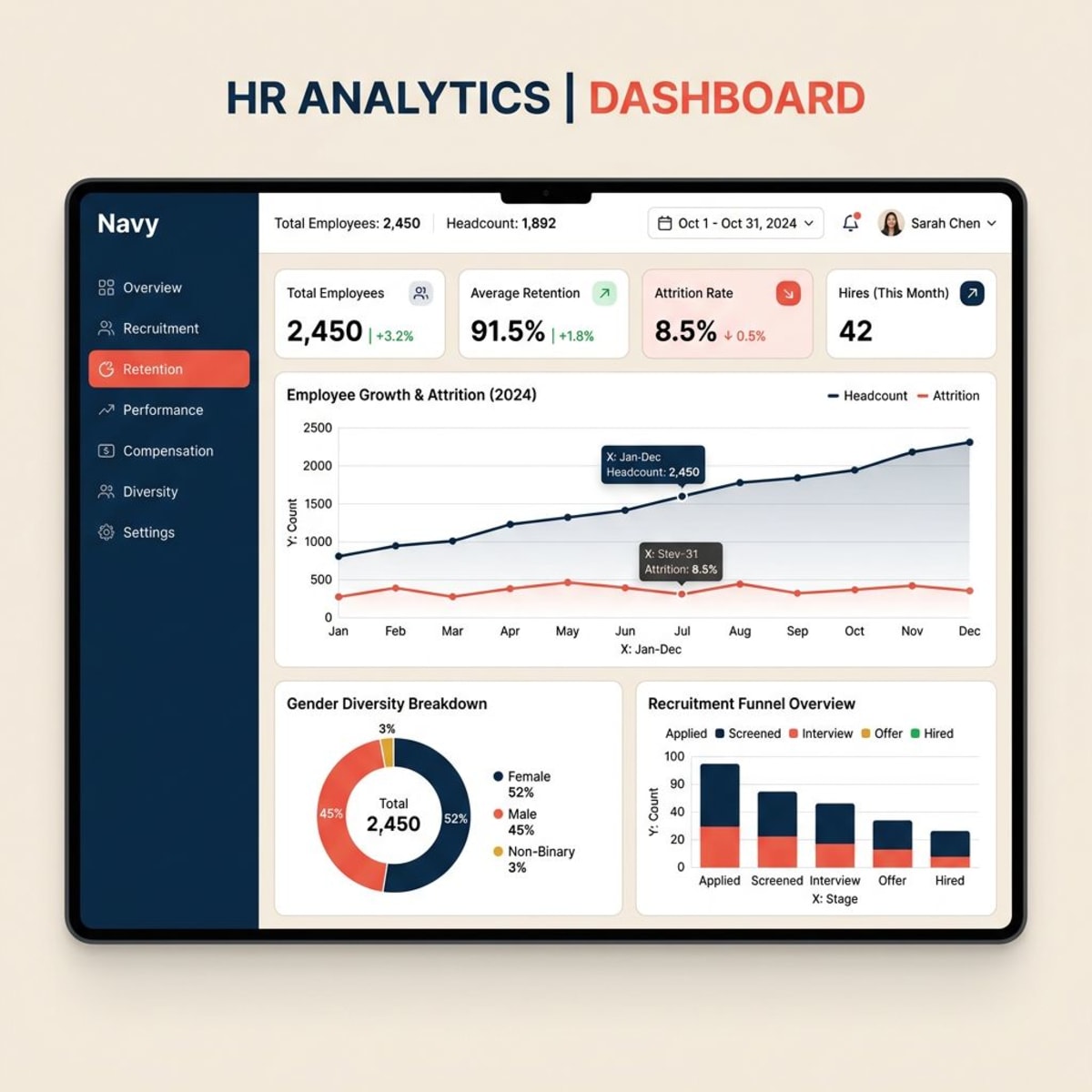
Track what matters. Go beyond basic turnover rates. Look at leading signals like eNPS trends and hiring funnel speed. Use exit data to find real patterns. Ask why people leave, not just when.
Quick win: Check if early peer feedback predicts long-term success. If it does, make it a standard part of onboarding.
2. Employee Experience Design
Map every step of the employee journey. Each step is a chance to build trust and strengthen your culture.
- Pre-hire: How smooth is your application process?
- First week: Do new hires feel welcome and prepared?
- Daily work: Are tools and norms helping or creating friction?
- Growth: Can people see a clear path forward?
- Recognition: Do you celebrate wins publicly?
- Exit: What do departing team members honestly say?
3. Strategic Hiring
Stop just filling seats. Build a real talent pipeline. Use scorecards and structured interviews to reduce bias. Track time-to-hire and quality-of-hire to find what works best. For detailed review templates, check our employee review guide.
Good hiring also means great onboarding. A strong first 90 days sets the tone for the whole relationship.
4. Performance Systems
Ditch the annual review. Use ongoing feedback instead. Regular conversations beat once-a-year surprises every time.
- Weekly or biweekly one-on-ones with managers
- Clear goal-setting tied to company priorities
- Peer feedback for a full picture of each person
- Growth plans that map out next steps
- Public recognition for strong results
5. Compensation Strategy
Think beyond salary. Consider the full package your company offers. Fair base pay matters, but it's not everything.
- Market-rate salary based on role and experience
- Flexible work options that respect personal time
- Learning budgets for courses and conferences
- Equity or bonuses tied to performance
- Meaningful work and genuine growth chances
6. Culture Building
Don't let culture happen by accident. Define your values early and write them down. Survey your team each quarter to measure cultural health. Train leaders to model the behaviors you want to see every day. Culture starts at the top but lives in daily habits across the whole team.
Strong culture also means handling conflict well. When issues arise, deal with them fast and fairly. Document what happened and what you decided. This builds trust over time. People stay where they feel heard and respected.
Remote and hybrid teams need extra culture work. Without a shared office, culture doesn't build itself. Use regular video check-ins, virtual team events, and shared rituals. Make sure remote workers feel just as included as in-office ones.
How to Build People Ops (Step by Step)
You don't need a big team or budget to start. One person can manage this part-time for teams under 30.
Step 1: Audit Where You Stand
Run a quick health check on your people processes. Survey your team. Map your hiring and onboarding flows. Find the biggest pain points first.
Ask these simple questions:
- How long does hiring take from start to finish?
- Do new hires feel set up for success in week one?
- How often do managers give useful feedback?
- Why did your last few departures leave?
- What one thing would improve daily work life?
- Do people feel safe raising concerns with their manager?
- Are roles and expectations clear for every team member?
Step 2: Build the Basics
Focus on three things first. Get them right before adding more.
Structured onboarding. Create a clear first-week plan. Add a 30-60-90 day framework with checkpoints. See our new hire onboarding checklist for a ready-to-use template. Good onboarding cuts early turnover in half.
Regular feedback. Set up weekly one-on-ones between managers and reports. Run brief quarterly pulse surveys with 5–7 questions. Keep it simple and consistent. Don't over-engineer it.
Basic metrics. Track eNPS, voluntary turnover rate, and time-to-hire. Even a spreadsheet works great at first. The key is tracking trends over time, not just snapshots.
Step 3: Pick Your Tools
Start simple. You can always add more later as your team grows.
Tiny Team gives you an all-in-one platform for small teams. It covers people management, time-off tracking, hiring, and performance reviews. Flat annual pricing means no per-seat surprises as you grow.
Other options like BambooHR ($13/person/month) or Gusto ($12/person/month) work too. Pick what fits your size, needs, and budget.
Step 4: Train Your Managers
Good managers keep people. Bad ones drive them away. Studies show 75% of people who quit cite their boss as the main reason. Invest in your leaders early.
Teach managers to:
- Run useful one-on-ones with a clear agenda
- Give specific, kind, and timely feedback
- Spot burnout and morale problems early
- Recognize great work publicly and often
- Have honest career development conversations
A simple manager toolkit with templates goes a long way. Pair it with monthly coaching sessions where managers share wins and challenges.
Step 5: Keep Improving
Review your people metrics each quarter. Ask your team what's working and what's not. Fix one thing at a time. Don't try to change everything at once. Slow, steady progress beats a big bang rollout.
Run a formal people strategy review once a year. Set goals that align with your business plan. Budget for the tools and training you need.

Key People Ops Metrics to Track
Focus on numbers that drive real results for your team.
eNPS (Employee Net Promoter Score). Would your team recommend working here? Score ranges from -100 to 100. Aim for 30+. Over 50 is exceptional. Survey quarterly to spot trends.
Voluntary turnover rate. Keep it under 10% per year for small teams. Track when people leave to spot patterns. Exits in months 0–3 signal onboarding issues. Exits at 1–2 years suggest growth or pay concerns.
Cost of turnover. Replacing someone costs 50–200% of their yearly salary. Lower turnover saves real, measurable money. Calculate this number so leadership takes retention seriously.
Time to hire. Aim for 20–30 days for most roles. Longer timelines mean you lose good candidates to faster companies. Track by role type to set realistic targets.
Goal achievement rate. Target 70–80% across the team. Too high means goals are too easy. Too low means they're unclear or unrealistic.
Manager effectiveness scores. Ask direct reports to rate their manager each quarter. Low scores predict future turnover. Use results for coaching, not punishment.
Internal mobility rate. Track how many open roles you fill with current employees. High internal mobility means people see real growth paths. It also cuts hiring costs and keeps knowledge inside the company.
New hire satisfaction. Survey every new hire at 30 and 90 days. Ask about onboarding quality, role clarity, and manager support. Fix problems fast before they become turnover risks.
Common Mistakes to Avoid
Starting too complex. Don't buy enterprise tools for a 15-person team. A 20K platform that only 30% of people use is wasted money. Start simple and grow from there.
Collecting data you never use. Only track metrics that lead to real action. Data for its own sake just wastes everyone's time. Start with a question, then find the data.
Copying big companies. Google's playbook won't fit your 20-person startup. Learn the principles behind their practices. Then adapt them to your own context and culture.
Skipping manager training. Promoting great workers doesn't make great managers. Give new leaders training, templates, and ongoing support. This is the highest-ROI people investment you can make.
Changing too much at once. Roll out one new process at a time. Give people 2–3 months to adjust before adding the next thing. Change fatigue kills adoption of good ideas.
Ignoring compliance. Great culture doesn't replace proper documentation. Keep your employee records clean. Stay current on labor laws. Be human and legal at the same time.
Treating all feedback equally. Not every complaint needs a company-wide fix. Sort feedback by theme and frequency. Focus on changes that affect many people or critical business outcomes. Some issues are one-off preferences, not systemic problems.
Not budgeting enough time. People ops needs real, dedicated time. Plan for about 15–25% of one person's week for every 20–30 employees. Treat it like any other business function, not a side project you squeeze in.

Frequently Asked Questions
What's the difference between People Ops and HR?
People ops focuses on employee experience and business results. Traditional HR centers on compliance and admin tasks. People ops uses data to improve how work gets done. HR focuses more on policy and risk. The core shift is treating employees as assets to develop, not risks to manage.
How big does my team need to be for People Ops?
You can start with as few as five people. Begin with feedback loops and structured onboarding. As you pass 20–25 people, more formal systems become essential. Most companies hire a dedicated people ops person around the 50–75 employee mark.
What's the ROI of People Operations?
Strong people ops drives 21% higher profits and much lower turnover costs. For small teams, keeping just 2–3 extra people per year often pays for the entire program. The savings come from lower hiring costs, faster onboarding, and better daily output.
Can we do People Ops without expensive software?
Yes. Use free tools like Google Forms and spreadsheets to start. Focus on building good processes first. Add paid tools later when you hit real pain points. Many of the best people ops improvements are about process design, not technology.
How do I measure People Ops success?
Track voluntary turnover, time-to-hire, eNPS, and goal achievement rates. The best overall measure is simple. Are you hiring better people, keeping them longer, and getting more done as a team?
What if my team resists new processes?
Start with fixes that solve obvious pain points your team already feels. Involve people in the design process so they feel ownership. Roll out changes one at a time. Explain how each change helps them, not just the company. Most pushback fades once people see real improvements in their daily work.
People ops takes time to build. But the payoff is real and lasting. Start small. Fix what hurts most. Measure what matters. Your team will thank you for it.
Ready to get started? Tiny Team is built for small companies. It covers people management, time-off, performance reviews, and hiring — all in one flat-rate platform. Try it free for 14 days.