Your eNPS score is the fastest way to gauge whether your employees would recommend your company as a place to work. Short for Employee Net Promoter Score, eNPS distills workforce sentiment into a single number between -100 and +100 — giving founders and HR managers an instant pulse check without the overhead of a 50-question engagement survey.
For small teams, where one disengaged person can shift the entire culture, tracking eNPS regularly is one of the highest-leverage things you can do. This guide covers everything: the formula, real-world benchmarks, the right questions to ask, and concrete tactics to move your score in the right direction.
What Is an eNPS Score?
Employee Net Promoter Score borrows directly from the Net Promoter Score (NPS) framework that Fred Reichheld introduced in 2003 for measuring customer loyalty. The concept is identical — instead of asking customers, you ask employees one question:
"On a scale of 0 to 10, how likely are you to recommend this company as a place to work?"
Based on their response, each employee falls into one of three categories:
- Promoters (9–10): Enthusiastic advocates who genuinely enjoy working at your company and actively refer candidates.
- Passives (7–8): Satisfied but unenthusiastic. They won't badmouth you, but they won't champion you either.
- Detractors (0–6): Unhappy employees who may be actively disengaged, looking for other jobs, or discouraging others from joining.
The beauty of eNPS is its simplicity. A single question takes 10 seconds to answer, which means you can run it quarterly (or even monthly) without survey fatigue. Compare that to a full employee engagement survey that might take 20 minutes and get a 40% response rate.
How to Calculate Your eNPS Score
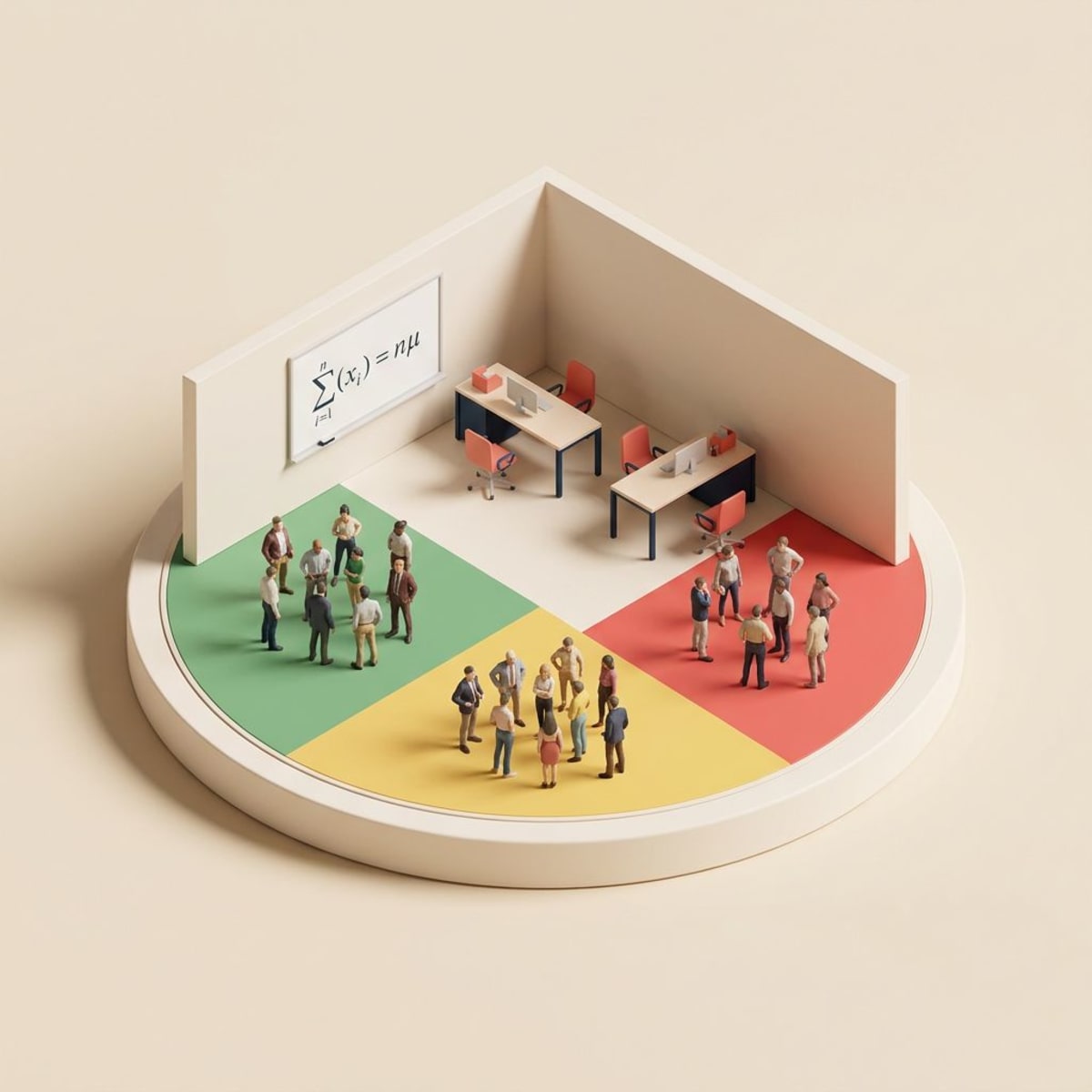
The formula is straightforward:
eNPS = % of Promoters − % of Detractors
Here's a step-by-step example for a 20-person team:
Step 1: Collect Responses
You send the survey and get these results:
| Rating | Count | Category |
|---|---|---|
| 9–10 | 8 employees | Promoters |
| 7–8 | 7 employees | Passives |
| 0–6 | 5 employees | Detractors |
Step 2: Calculate Percentages
- Promoters: 8 ÷ 20 = 40%
- Passives: 7 ÷ 20 = 35% (not used in formula)
- Detractors: 5 ÷ 20 = 25%
Step 3: Apply the Formula
eNPS = 40% − 25% = +15
Your eNPS is +15. That's a positive score, meaning you have more advocates than critics — but there's room to improve.
A few important notes on the math. Passives don't factor into the calculation at all. They're a neutral middle ground. Also, the result is expressed as a whole number (not a percentage), even though you use percentages to get there. And because you're subtracting one percentage from another, the possible range spans from -100 (every employee is a detractor) to +100 (every employee is a promoter).
eNPS Benchmarks: What Is a Good Score?

Understanding where your score falls matters more than the number itself. According to research by Perceptyx, the overall eNPS benchmark across organizations is approximately 12, while other studies place the average at 14.
Here's a general framework:
| eNPS Range | Rating | What It Means |
|---|---|---|
| -100 to -1 | Needs attention | More detractors than promoters — investigate root causes immediately |
| 0 to +10 | Fair | Net positive, but significant room for growth |
| +10 to +30 | Good | Healthy workplace — most employees are satisfied |
| +30 to +50 | Excellent | Strong culture with highly engaged employees |
| +50 to +100 | World-class | Exceptional — your team is your biggest recruiting asset |
Small Team Context
Here's what most guides miss: benchmarks shift dramatically for small teams. In a 10-person company, a single detractor swings your score by 10 points. One person having a bad month — maybe they're dealing with a personal issue or frustrated by a recent project — can drop your score from "excellent" to "fair."
A 30-person marketing agency in Denver discovered this firsthand. Their eNPS dropped from +40 to +10 in a single quarter. The culprit? Three employees were burned out after a major client launch. Once leadership noticed the shift and adjusted workloads, the score bounced back to +35 within two months.
The takeaway: don't panic over a single quarter's results. Track the trend over 3–4 measurement periods before drawing conclusions.
eNPS vs. Employee Engagement Surveys

Both measure employee sentiment, but they serve fundamentally different purposes. Think of eNPS as a thermometer and engagement surveys as a full diagnostic workup.
| Factor | eNPS | Engagement Survey |
|---|---|---|
| Questions | 1 core question + 1-2 follow-ups | 30–60 questions |
| Time to complete | Under 1 minute | 15–25 minutes |
| Response rate | 85–95% typical | 50–70% typical |
| Frequency | Monthly or quarterly | Annually or semi-annually |
| Depth | Surface-level pulse | Deep diagnostic insights |
| Actionability | Quick directional signal | Detailed action plans |
| Cost | Free (spreadsheet works) | Often requires paid tools |
Neither replaces the other. The most effective approach for small teams is to run eNPS quarterly as your ongoing pulse check, then conduct a full employee satisfaction survey once or twice a year for deeper insights. When your eNPS dips unexpectedly, that's your signal to dig deeper — maybe with stay interview questions or one-on-one meetings.
Best eNPS Survey Questions to Ask
The core eNPS question is standardized, but the real value comes from pairing it with targeted follow-up questions. Here's a framework that works well for small teams.
The Core Question
"On a scale of 0 to 10, how likely are you to recommend [Company Name] as a place to work?"
Never modify this question. The standardized wording is what makes your results comparable over time and against external benchmarks.
Follow-Up Questions (Pick 1–2)
After collecting the numerical rating, include one open-ended question tailored to the respondent category:
For Promoters (9–10):
- "What do you value most about working here?"
- "What would make this an even better place to work?"
For Passives (7–8):
- "What one thing would move your rating higher?"
- "Is there something specific holding you back from recommending us?"
For Detractors (0–6):
- "What is the primary reason for your score?"
- "What change would have the biggest impact on your experience?"
Timing and Delivery Tips
Run your eNPS survey at consistent intervals — quarterly is the sweet spot for most small teams. Pick a specific week each quarter (like the first full week) so employees come to expect it. Send it mid-week (Tuesday or Wednesday) around 10 AM, when people are settled in but not yet in afternoon mode.
Keep the survey anonymous. According to SHRM research on employee surveys, anonymity significantly increases honest participation — especially in small teams where people may worry about being identified.
How to Improve Your eNPS Score

Collecting the score is easy. Moving it is the hard part. Here are six strategies that actually work for small teams — not generic advice like "improve company culture."
1. Close the Feedback Loop (Within 2 Weeks)
The number-one reason eNPS surveys fail is that employees never see results or action. Within two weeks of collecting responses, share a summary with your team:
- Here's what we heard (themes, not individual responses)
- Here's what we're going to do about it
- Here's when you'll see changes
A 15-person SaaS startup in Austin started sharing quarterly eNPS results during their all-hands meeting. They committed to tackling one detractor theme per quarter. In 12 months, their eNPS climbed from +8 to +32 — not because they solved every problem, but because employees felt heard.
2. Focus on Detractors First
It's tempting to celebrate your promoters, but the fastest way to improve eNPS is converting detractors. If five detractors become passives, your score improves more than if five passives become promoters.
Use the follow-up question data to identify patterns. Common detractor themes in small companies include:
- Unclear growth paths or promotion criteria
- Compensation concerns (use compensation planning to address this)
- Feeling overworked without recognition
- Poor communication from leadership
3. Invest in Manager Quality
According to Gallup's State of the Global Workplace report, managers account for 70% of the variance in team engagement. In a small team, this effect is amplified — your managers (or you, as a founder) are the single biggest lever.
Practical steps:
- Run regular one-on-one meetings with a consistent agenda
- Train managers on constructive feedback
- Set up structured performance reviews so feedback isn't ad-hoc
4. Recognize Contributions Publicly
Recognition doesn't need a budget. A genuine shout-out during a team meeting, a message in your company timeline, or highlighting someone's work in a weekly update costs nothing and moves the needle.
Check out our guide on employee recognition programs for a complete framework — including low-cost ideas perfect for teams under 50 people.
5. Create Visible Growth Opportunities
Even at a 20-person company, people want to know where they're going. Document career paths, create employee development plans, and tie performance review examples to concrete growth milestones.
6. Address Compensation Transparently
If compensation is a detractor theme, ignoring it won't make it go away. Small teams benefit from pay transparency — being open about how you set salaries, when reviews happen, and what the criteria are. Even when you can't raise salaries immediately, transparency builds trust.
How Often Should You Measure eNPS?

There's no single right answer, but here's a practical framework based on team size:
| Team Size | Recommended Frequency | Why |
|---|---|---|
| 5–15 people | Every 6 months | Small sample makes quarterly data volatile; semi-annual smooths noise |
| 15–50 people | Quarterly | Enough statistical significance to spot trends without survey fatigue |
| 50–100 people | Monthly or quarterly | Larger samples support more frequent measurement |
Whatever cadence you choose, consistency matters more than frequency. Measuring quarterly for two years gives you eight data points — enough to identify seasonal patterns, correlate changes with specific initiatives, and set realistic improvement targets.
Tracking Over Time
Create a simple tracking spreadsheet or use your HR platform to log each period's results. The metrics worth tracking alongside eNPS include:
- Response rate — dropping participation often signals survey fatigue or distrust
- Category distribution — watch how the promoter/passive/detractor split shifts
- Follow-up themes — are the same issues recurring quarter after quarter?
- Employee turnover rate — does eNPS predict actual attrition?
Platforms like Tiny Team include performance review tools that make it easy to centralize this kind of feedback alongside your regular review cycles — so your eNPS data doesn't live in a disconnected spreadsheet.
Frequently Asked Questions
What does eNPS stand for?
eNPS stands for Employee Net Promoter Score. It's an adaptation of the customer-facing Net Promoter Score (NPS), applied internally to measure how likely employees are to recommend their workplace to friends and family. The methodology was first adapted for employee use in the early 2010s.
What is a good eNPS score for a small company?
For small companies (under 50 employees), an eNPS of +10 to +30 is considered good. Scores above +30 are excellent. Keep in mind that small sample sizes create more volatility — a single employee's response can shift the score by 5–10 points. Focus on trends over multiple quarters rather than any single measurement.
Can eNPS be negative?
Yes. eNPS ranges from -100 to +100. A negative score means you have more detractors than promoters. While it's a red flag, it's also actionable — identify the top detractor themes through follow-up questions and address them directly. Many companies have recovered from negative eNPS within 2–3 quarters by taking visible action.
How is eNPS different from an employee satisfaction survey?
eNPS uses one standardized question and produces a single score, making it ideal for quick pulse checks. An employee satisfaction survey uses dozens of questions across multiple dimensions (compensation, management, growth, work-life balance) and provides diagnostic depth. Use eNPS for frequency and trend-tracking; use engagement surveys for depth and action planning.
Should eNPS surveys be anonymous?
Yes, especially for small teams. Anonymity encourages honest responses, particularly from detractors who might fear retaliation. In teams under 15 people, consider using a third-party survey tool so responses can't be traced — even unintentionally — by whoever administers the survey.
How many follow-up questions should I include?
Stick to 1–2 follow-up questions maximum. The power of eNPS is its brevity — adding too many questions defeats the purpose. One well-chosen open-ended question (like "What one thing would you change?") often yields more actionable insight than five specific questions.